CPPC

The Club

Polo in the Cotswolds since 1894

Est. 1894

The oldest polo club in England

Cirencester Park Polo Club holds the distinction of being the oldest polo club in England, with a history stretching back to 1894. Set within the breathtaking grounds of Cirencester Park, the private estate of the Earl Bathurst, the club enjoys one of the most magnificent settings in English sport.

Cirencester Park itself is an extraordinary landscape. Thousands of acres of ancient parkland, formal rides, woodland and open ground provide the backdrop for polo that is played at the highest level, in a setting of remarkable natural beauty.

The club sits in the heart of the Cotswolds, one of England's most celebrated areas of outstanding natural beauty. The combination of world-class polo, a historic landscape and warm club community makes Cirencester Park Polo Club a truly unique destination.

Our heritage

Club History

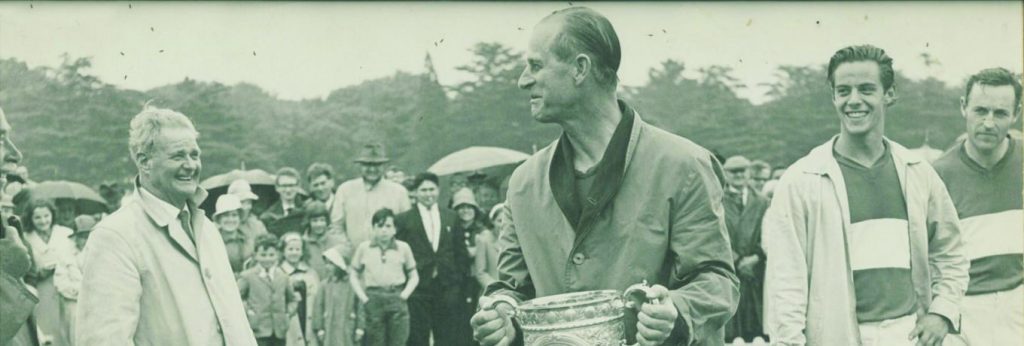
Historic polo photograph from the CPPC archive, banner 1
1 / 4
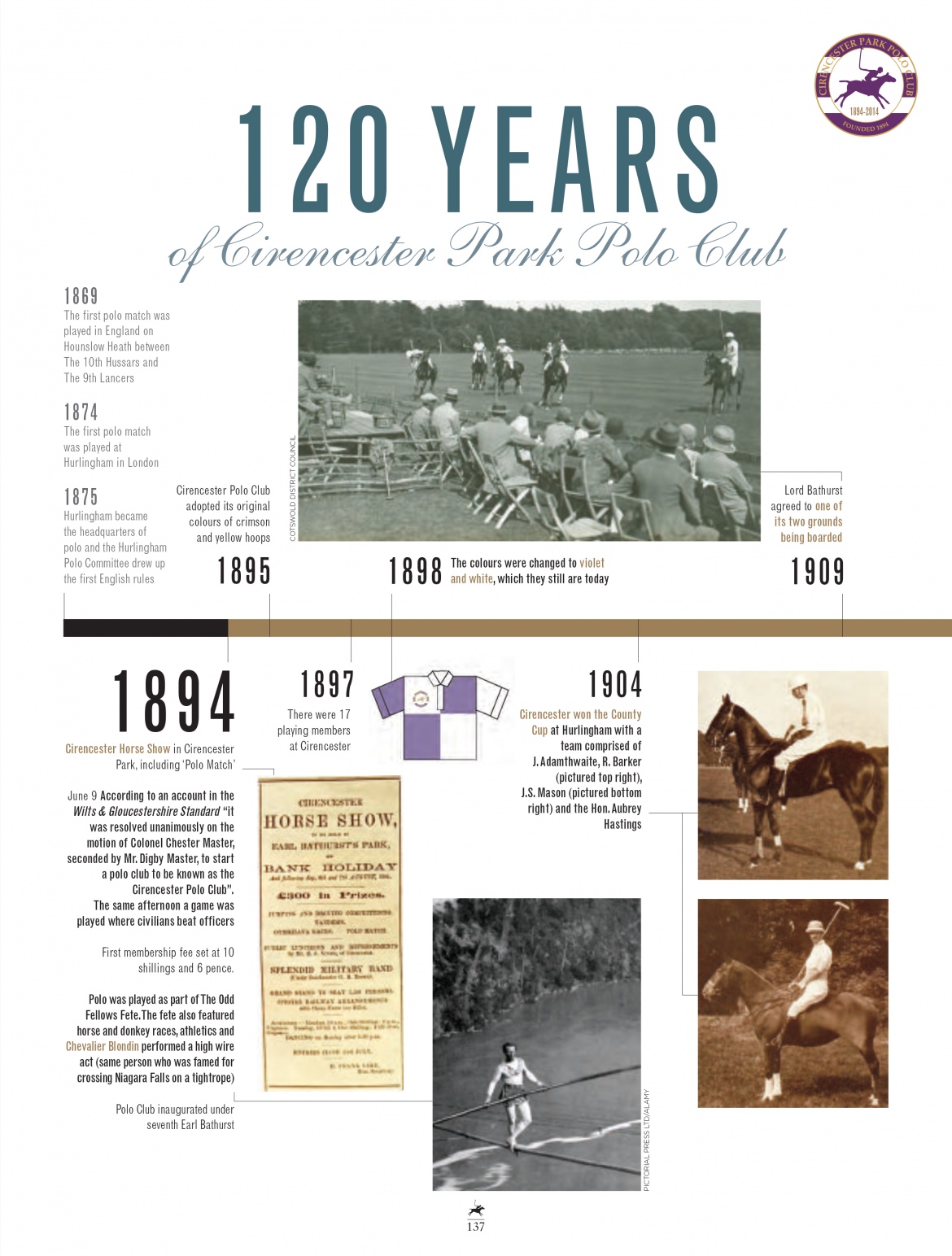
Original CPPC illustrated archive timeline for 1869–1909, preserving photographs, historical notes and printed credits
Original club archive · 1869–1909 · Open full-size page

The founding years

The Polo Club was inaugurated in the summer of 1894, under the Seventh Earl Bathurst, and since then has more than realised the hopes of its original founder. Two grounds were in use for matches at Cirencester, but it was not until 1909 that Lord Bathurst gave permission for the Ivy Lodge ground to be boarded. A local newspaper at that time reported:

“The concession is one which will be greatly appreciated by players, for Cirencester is practically the only first-class ground in England which is unboarded. This enables the County Cup to be played at Cirencester which, up to now, has been impossible.”

The early history of the Cirencester Club, set down in immaculate copper-plate handwriting in the minute books, reveals many differences between the polo of those days and of today. There is, for instance, mention that “two suitable horses be purchased for the rolling and mowing of the grounds”. Later, “one horse was loaned and another, a five year old, was purchased at Cheltenham for 17 guineas”.

At the turn of the century, the popularity of the game had spread throughout the country, with one newspaper commenting, “In no district has Polo made greater progress during the past five years than in Gloucestershire and the fact that three clubs with full sized grounds now exist in the county has made it possible for the senior club, Cirencester, to arrange a cycle of matches throughout the season without having to travel so far as was necessary before”.

War and revival

In July 1914, preparations were being made for the Open Tournament the following month. It was agreed that “Messrs Saunders & Sons Ltd. erect a stand about 80 feet long, to seat 230 people for an agreed sum of £27. 10s, three or four tiers of seats”. But, immediately below this minute are written seven terse lines:

“Four days after the above meeting, viz August 4, 1914, England declared war on Germany and the Great European War began in real earnest and members of the Polo Club of military age rushed to join their various regiments – the tournament being immediately abandoned and military duties at once entered upon.”

The war over, polo was resumed in the Park. For several seasons the sport was in good shape, with many leading players, including the then Prince of Wales, taking part in tournaments. During the 1939–45 conflict, the famous Ivy Lodge ground was ploughed up for the war effort. It was not until April 1952, when a meeting was called by Earl Bathurst and his brother, the Hon. George Bathurst, that it was unanimously agreed to re-form the Polo Club, now called Cirencester Park Polo Club.

Twenty-five players immediately announced their intention of playing. The Ivy Lodge ground was reclaimed and reseeded, and chukkas were played each Wednesday and Saturday. Soon more players came forward, as did non-playing members, and there was tremendous enthusiasm.

Players, teams and royal connections

Lord Vestey and his brother Mark, both of whom served as Chairman, were great supporters of polo at Cirencester. Their teams, Stowell Park and Foxcote, dominated the high-goal scene in the 1970s, winning all the major trophies. Between 1973 and 1980, they held the British Open Championship on no fewer than six occasions. To conclude a golden decade of high-goal successes, another local team, Alex Ebeid’s Falcons, were champions in 1981 and 1983.

Many top British players have been associated with Cirencester Park, notably Gerald Balding, described in the club’s original account as “one of the most outstanding Polo players of the 20th Century”, and Julian and Howard Hipwood, both captains of England who learned their polo at Cirencester as members of the VWH Pony Club. When the Prince of Wales, later Edward VIII, played polo at Cirencester Park in the 1920s, he was the first member of the Royal family to do so.

Prince Philip, Duke of Edinburgh, played in many tournaments during the 1960s. King Charles III, then Prince of Wales, participated in tournament polo and many charity matches. The original account also names Princes William and Harry in connection with charity games at Cirencester.

The original history records Mark Vestey’s three children as regular players. Other highly successful teams included Urs and Guy Schwarzenbach’s Black Bears and the Hanbury family’s Lovelocks.

The grounds and club life

The original account describes a playing membership of well over 100 and an expanding collection of grounds: Ivy Lodge, Peddington, Meadows, Sweethills, Coombe Farm, Savannah, Marks’s Field and Upper Field, together with grounds at Aston Down and a practice ground at Jackbarrow on the Miserden Estate. Coombe Farm, Savannah, Marks’s Field and Upper Field were recorded as additions since 2008.

Club facilities described in that account included a Clubhouse with bar and restaurant, changing rooms, grandstands within the members’ enclosure at Ivy Lodge, and smaller stands on the Meadows and Peddington grounds. Aston Down was described as irrigated, with a grandstand and bar/tea tent. One side of each ground was reserved for members’ car parking.

At the Ivy Lodge and Meadow grounds, parking between the two grounds provided easy access to the pony lines, where dozens of ponies were tended to by their grooms.

The Setting

Cirencester Park & The Cotswolds

The club's grounds lie within Cirencester Park — thousands of acres of private parkland owned by the Earl Bathurst and maintained as one of England's finest private estates. Access to polo grounds of this quality and scale is genuinely rare.

The Cotswolds setting adds to the experience. From the Pavilion and clubhouse overlooking the grounds, visitors and members enjoy a view of polo grounds, woodland rides and open sky that is unmistakably English and unmistakably special.

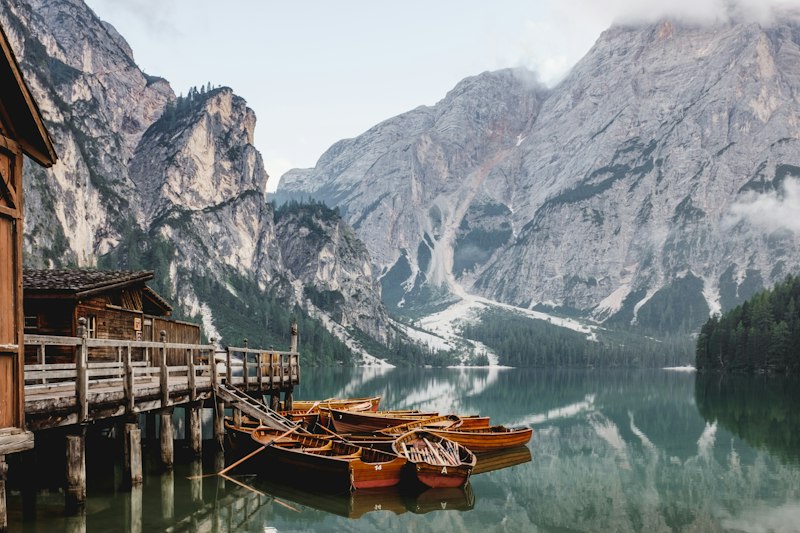
Cotswolds landscape

Heritage

Over 130 years of polo history, tradition and craftsmanship in the sport.

Community

A welcoming club for players, social members, visitors and partners alike.

Excellence

High-goal polo, beautifully maintained grounds and an unmatched Cotswolds setting.

The Pavilion & Clubhouse

The Pavilion and Clubhouse at Cirencester Park Polo Club provide an exceptional setting for members, guests and corporate visitors. With priority booking for members, The Pavilion restaurant overlooks the grounds and provides hospitality throughout the season. The Clubhouse includes fast Gigaclear broadband and facilities for members year-round.

Meet the Team

Club team and management profiles coming soon.

CPPC Yearbook

The annual yearbook is available from the club office. Digital link coming soon.

Our Partners & Sponsors

S² Mechanical ServicesQuantum SwitchChampagne PommeryStrutt & ParkerCotswold AirportWiltshire Wealth ManagementHadleigh Real PropertyThe Rural Planning PracticeThe Ailesbury ClubR&R Catering & Event HireStroud FarmRJ PoloGWAS PoloBirch CateringYerba SpiritTanners Solicitors LLP